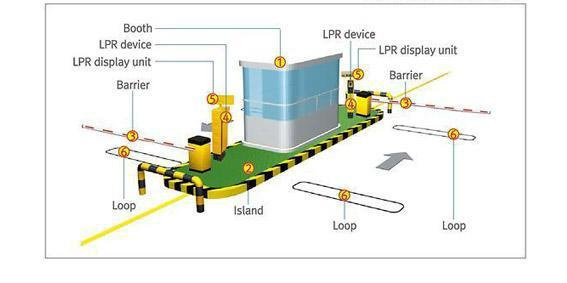
The improvement of license plate recognition technology has made life much easier for parking lot managers and car owners alike. It is essential for easing traffic congestion and enabling intelligent vehicle management. For drivers, an intelligent license plate recognition system automatically captures the plate information as they enter the lot and authorizes the barrier to lift through the transmitted data.
Parking lots with heavy traffic flow benefit in particular, since a vehicle can be admitted in just one second. Some users assume that the recognition rate of a license plate recognition system should be a perfect 100 percent. In reality, a range of objective factors makes that figure difficult to achieve.
What are the reasons that restrict the recognition rate of intelligent ANPR systems? In the practical operation of a parking lot equipped with a smart license plate recognition system, several factors can limit performance:
-
The system cannot identify a vehicle that has no license plate.
-
In extreme weather such as storms or blizzards, the vehicle's plate may be obscured. At night, glare from car headlights can also have a major impact on the recognition camera.
-
Lane separation for motor vehicles is not always standardized, and plates are sometimes blocked by passing pedestrians.
-
The terrain at the entrance and exit can be restrictive. Installing a smart license plate recognition system must therefore be based on an on-site inspection and a reasonable solution designed around the actual needs of users.
Today, more and more intelligent ANPR systems are used in parking lots across many regions, including residential communities, workplaces, commercial plazas, public security agencies, schools, hospitals and hotels. This kind of intelligent management equipment has become part of daily life and continues to safeguard people's parking security.