
Surveys show that license plate recognition in parking lots is increasingly favoured by car owners and operators. Its efficient, intelligent functions let vehicles pass quickly and prevent users from queueing at peak times. Using the plate number as the entry and exit credential improves vehicle security and closes charging loopholes, while eliminating card management work and the problem of users forgetting their card. Given all these functions, what does a parking lot license plate recognition system consist of?
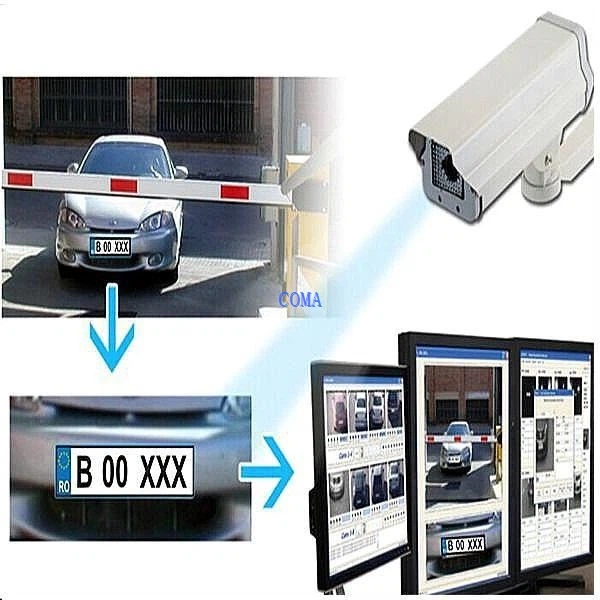
In essence, a license plate recognition parking lot is similar to a conventional parking lot system. It is made up of intelligent barriers, barrier control machines (ticket machines), ground sensing coils, vehicle detectors, electronic displays, a guard booth, surveillance cameras and a parking lot management computer. Parking lots with higher functional requirements need surveillance cameras and barrier control machines. Below, COMA introduces the core equipment used for license plate recognition.
- Surveillance camera. This camera is quite different from the general image comparison camera used in parking lots. It is a dedicated license plate recognition camera that performs video capture, image preprocessing, plate detection, plate segmentation, character recognition, tracking and comparison, image compression and data transmission. It handles complex computer image processing, offers fast recognition and high reliability, and can separately recognize the plates in two input video streams.
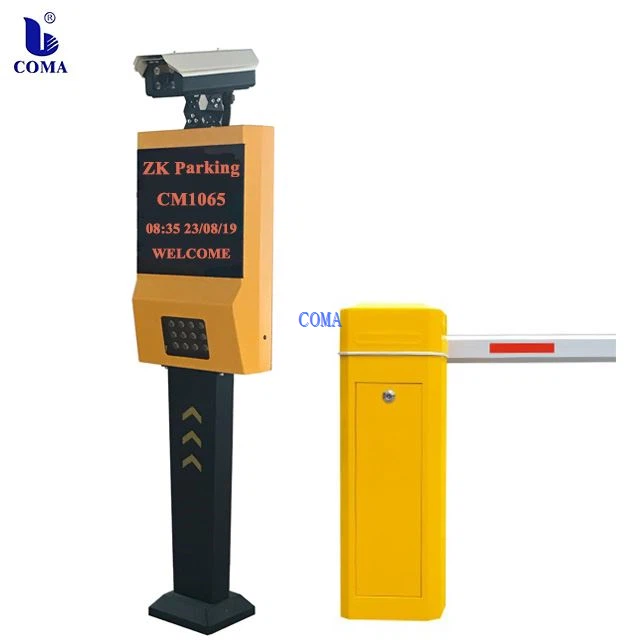
- Supplementary light. License plate recognition places very high demands on the on-site environment, and insufficient light is inevitable. Supplementary lighting ensures the recognition camera has enough light to capture the plate successfully.