
What are the installation standards for a battery swap cabinet?
Preliminary Preparations
Personnel: installers and professional electricians.
Equipment: a forklift (depending on the situation), an electric drill, an impact drill, and national-standard cable as specified by the manufacturer.
Weather: because electricity is involved, avoid rainy days where possible.
Indoor Installation Requirements for a Battery Swap Cabinet
The battery swap area should be separated from other production and living areas by a solid wall.
The battery swap area should not obstruct evacuation routes.
When the room temperature in the battery swap area reaches 35°C, exhaust ventilation should be activated, with an exhaust volume calculated at 60 m³/(h×m²).
Fire extinguishers or other fire-fighting equipment should be installed.
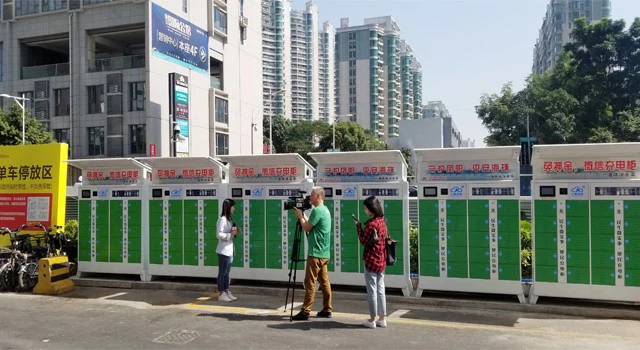
Outdoor Installation Requirements for a Battery Swap Cabinet
The cabinet should be installed on a solid, flat concrete floor at least 15 cm thick.
Sufficient clearance should be maintained around the cabinet to ensure heat dissipation and maintenance access.
A line should be drawn at least 1 meter in front of the cabinet to separate the battery swap area from the parking area.
The charging and swapping area should be covered to provide shade and protection from rain.